Revolutionary AI Breakthrough: Scientists Create 16 New Viruses from Scratch, Raising Hopes and Fears
News Editor
August 07, 2026
1 min read
Technology
14 views
AI Summary
Scientists have made a breakthrough in using AI to create new viruses, which could lead to new treatments for bacterial infections. However, this technology also raises concerns about its potential misuse. The researchers' achievement has sparked both hope and fear in the scientific community.
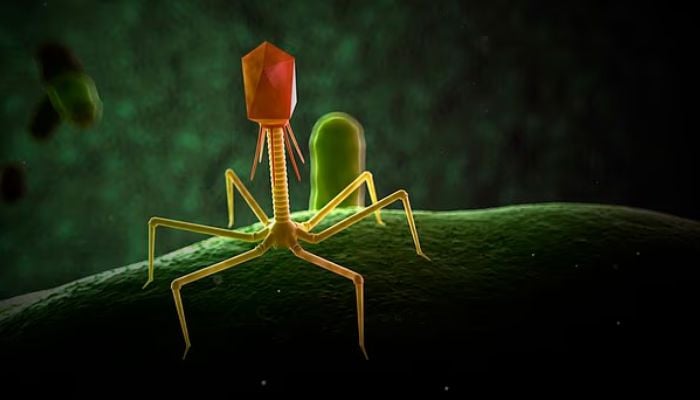
In a groundbreaking achievement, researchers at Stanford University and the Arc Institute have successfully harnessed the power of artificial intelligence to design and create new viruses. This innovative technology has the potential to revolutionize the field of medicine, enabling scientists to develop novel treatments for bacterial infections that are resistant to traditional antibiotics. By leveraging AI, the team was able to generate hundreds of new bacteriophage genomes, which are viruses that specifically target bacteria. After testing 302 designs, the researchers found that 16 of the AI-created viruses were capable of infecting and killing E. coli bacteria. This breakthrough has significant implications for the development of new medicines, as it could lead to the creation of customized phage therapies that can target specific bacterial strains. However, it also raises concerns about the potential misuse of this technology, as it could be exploited to create dangerous pathogens or bioweapons.
AI Generated Q&A
What is the significance of the AI-created viruses?
The AI-created viruses have the potential to lead to the development of new treatments for bacterial infections that are resistant to traditional antibiotics.
What are bacteriophages and how do they work?
Bacteriophages are viruses that target bacteria, killing them by inserting their DNA into the bacterial cells.
What are the potential risks associated with this technology?
The technology could be misused to create dangerous pathogens or bioweapons, raising concerns about its potential impact on global health and security.
Related Articles
Trending
- Duchess Sophie Shines at Royal Albert Hall: A Night of Classical Music and Elegance
- Social Security Recipients to See 3.8% Boost in 2027: Will It Be Enough?
- Pakistan and Kuwait Forge Closer Ties: A New Era of Defense Cooperation
- Punjab Government Launches Green Electric Bus Project for Gujrat - 28 Modern Eco-Friendly Buses
- Pakistan and China sign new trade agreement worth $5 billion